Log in

Resource
AIDA Model: The Classic Customer Funnel Explained
Published on
16th April 2026
Read time
18 mins
Sign up to our newsletter
Get the latest course, community and company news!
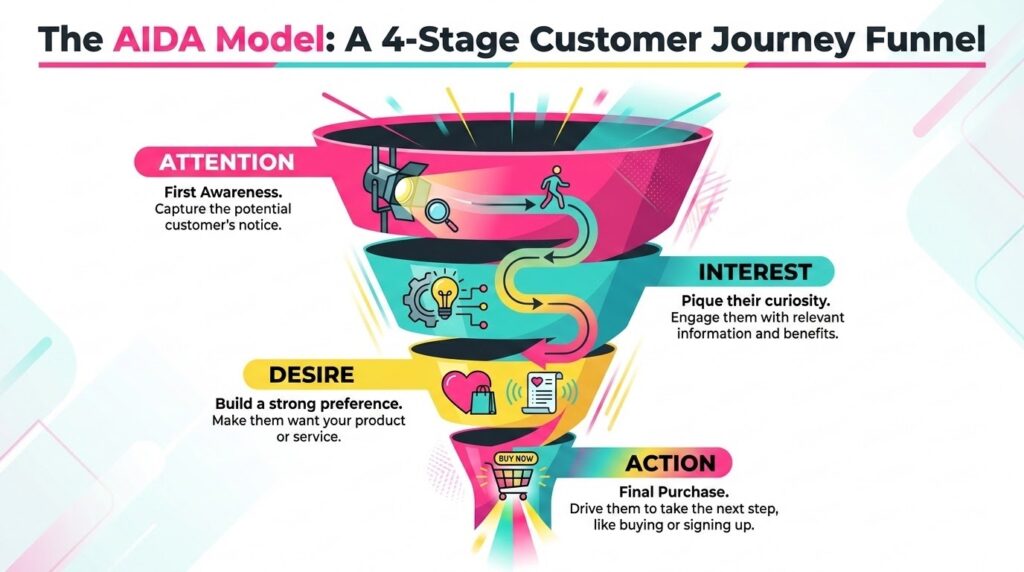
The AIDA model has been around longer than your great-grandparents' marriage, yet it still manages to describe how your target audience goes from "never heard of you" to "take my money" with surprising accuracy. The AIDA model breaks down the customer journey into four simple stages: Attention, Interest, Desire, and Action, creating a sales funnel that guides potential customers from first awareness to final purchase. Think of it as the recipe your marketing needs, minus the mysterious ingredient that nobody can pronounce.
You might be wondering why a framework from the late 1800s matters when you're trying to sell things on TikTok. The truth is, whether someone is reading a newspaper advert or scrolling through Instagram at 2 AM, their brain still follows the same basic pattern when deciding to buy something. The AIDA funnel works because human psychology hasn't updated its operating system in quite a while - I hear Google are still working on it.
This guide will walk you through each stage of AIDA marketing, show you how real companies use it today, and help you apply it to your own conversion funnel. You'll discover practical digital tactics, see what works in the real world, and learn why even this classic model has its quirks and limitations.
Breaking Down the Attention, Interest, Desire, Action Stages
The AIDA funnel works because it mirrors how your brain actually processes decisions, from that first "huh, what's that?" moment to clicking the buy button at 2 AM. Each stage plays a specific role in nudging you closer to becoming a customer.
Attention: Capturing Eyeballs in a Noisy World
You're scrolling through social media posts faster than you can say "targeted advertising," which means grabbing attention is harder than finding matching socks on laundry day. The attention stage is where your marketing needs to slap someone (metaphorically) across the face with something they can't ignore.
St. Elmo Lewis knew this back in 1898, and it's even more true now. Your headline, subject line, or opening image has roughly three seconds to stop the scroll. That's less time than it takes to sneeze.

Think bold colours, unexpected questions, or statistics that make people go "wait, really?" For campaigns to work at this stage, you need to understand consumer behaviour well enough to know what makes your audience actually pause. Short-form videos work brilliantly here. So do headlines that promise to solve a problem your audience didn't even realise they had.
The marketing funnel starts here, and if you mess it up, nobody's moving to interest.
Interest: Engaging the Reluctant Scroller
Right, so you've got their attention. Now you need to keep it for longer than a goldfish could manage.
The interest stage is where you prove you're not just another boring brand shouting into the void. You do this by showing you actually understand your audience's problems. Interactive landing pages work well here because they give people something to do beyond just reading.
Personalisation is your best mate in this phase. Generic copy makes people yawn and click away. But when you speak directly to their situation, they'll stick around. Blog posts that answer specific questions keep readers engaged whilst building trust.
Social proof helps too. When people see that others like them are interested, they're more likely to stay curious. The customer journey depends on you giving them enough information to care without drowning them in details. Think of it like a first date – you want to be interesting, not overwhelming.
Desire: Creating That 'I Need This' Feeling
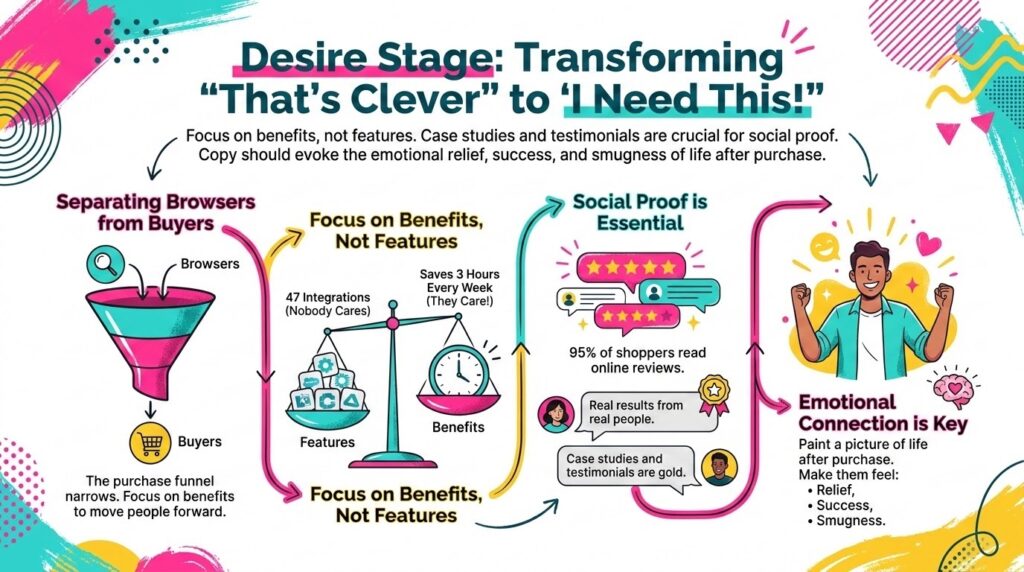
Interest is nice, but desire is where things get spicy. This is the stage where you transform "that's quite clever" into "I absolutely need this in my life right now."
The purchase funnel narrows here because you're separating browsers from buyers. You do this by focusing on benefits, not features. Nobody cares that your software has 47 integrations. They care that it'll save them three hours every week.
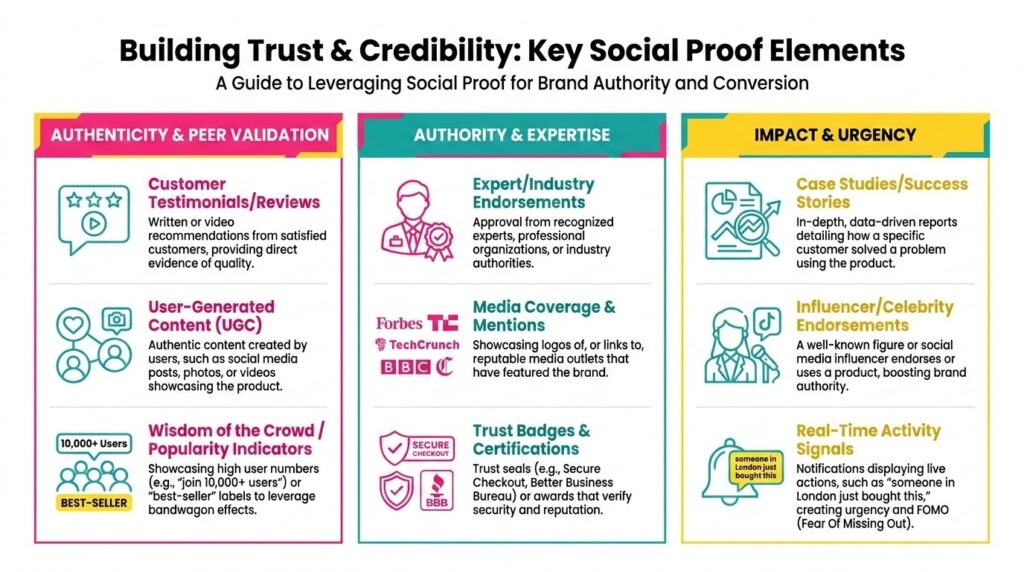
Case studies and testimonials are gold at this stage. About 95% of shoppers read online reviews before buying, which means social proof isn't optional anymore. Show real results from real people who had real problems.
Copy principles here should paint a picture of life after purchase. Make them feel the relief, the success, the smugness of making a brilliant decision. The customer funnel depends on this emotional connection to move people forward.
Action: Pushing the Button (or the Human)
You've done all the hard work. Now don't cock it up by being vague about what happens next.
Your call to action needs to be clearer than your nan's instructions for making tea. "Click here" is rubbish. "Get your free trial" or "Download the guide now" tells people exactly what they're getting. Emails with a single call-to-action increased clicks by 371%, so resist the urge to offer seventeen different options.
Remove friction like you're decluttering a hoarder's house. Every extra form field, every confusing step, every "create an account first" loses you customers. Make the path from desire to action as smooth as possible.
The AIDA model ends here, though some marketers add retention to create AIDAR. But for now, your job is simple: make taking action easier than not taking action.
Digital Marketing Tactics for Every AIDA Stage
Each stage of the AIDA model requires different digital marketing strategies to move prospects closer to conversion. From capturing initial attention through social media to deploying AI-powered email sequences that drive purchases, modern tools let you target customers precisely where they are in their journey.
Building Awareness with Digital Media
You need to make noise in crowded digital spaces, and paid social campaigns are your megaphone. Facebook, Instagram, TikTok, and LinkedIn ads let you target specific demographics with laser precision. Your goal isn't to sell yet—it's simply to exist in someone's consciousness.
Search engine optimisation works more slowly but builds lasting visibility. When you optimise for voice search and traditional queries, you appear exactly when people need answers. Blog posts, infographics, and videos all signal to Google that you're worth showing to searchers.
Display advertising and Google Shopping campaigns put your products directly in front of browsers. These visual formats work brilliantly for grabbing eyeballs whilst people scroll through their daily internet habits. Don't forget content marketing either—educational resources that solve problems establish your brand as helpful rather than pushy.
Social media posts that entertain or inform build awareness without feeling like advertisements. Think memes, industry insights, and behind-the-scenes content that makes your brand memorable. The AIDA model adapts well to modern marketing channels precisely because these digital tactics align with how people actually discover brands today.
Turning Interest into Online Engagement
Once you've got attention, you need to keep people around. Email marketing sequences nurture that initial spark into genuine curiosity. You're offering value—guides, webinars, case studies—not just sales pitches.
Retargeting campaigns through paid social remind browsers what caught their eye initially. Someone visited your pricing page? Show them customer testimonials. They watched a product video? Display user-generated content featuring that item. This isn't creepy; it's strategic reminder marketing.
Interactive content transforms passive scrollers into active participants. Quizzes, calculators, assessments, and polls give people reasons to engage with your brand. Web analytics track these micro-interactions, revealing which topics genuinely fascinate your audience versus what falls flat.
Social media engagement tactics—responding to comments, hosting live Q&As, creating polls in Stories—build relationships. You're demonstrating that actual humans run your accounts, not just automated posting schedules. This stage in the inbound marketing funnel requires patience and consistency rather than aggressive selling.
Stoking Desire Through Digital
Desire doesn't happen by accident, you engineer it. Product demonstration videos show your offerings in action, letting prospects visualise ownership. Customer reviews and ratings provide social proof that others didn't just buy but actively recommend what you sell.
AI-powered email sequences personalise messaging based on browsing behaviour and past interactions. Artificial intelligence analyses which products someone viewed, how long they lingered, and what similar customers purchased. Then it serves up tailored recommendations that feel eerily spot-on (because they are).
Comparison guides and detailed specifications help rational buyers justify emotional wants. Case studies demonstrate real-world results, transforming abstract benefits into concrete outcomes. Limited-time offers create urgency without resorting to sleazy countdown timers on every page.
Recommendation engines suggest complementary products or upgrades, increasing perceived value. When prediction analytics identify high-intent visitors, you can trigger special offers or live chat invitations. User-generated content—photos, videos, testimonials from actual customers—proves that your promises aren't just marketing fluff. These digital marketing strategies work together to transform "that's interesting" into "I need this now."
Driving Action with Modern Tools
You've built awareness, sparked interest, and stoked desire. Now make buying ridiculously easy. One-click purchasing, guest checkout options, and multiple payment methods remove friction. Every extra form field is another chance for cart abandonment.
PPC campaigns with action-focused copy—"Shop Now," "Start Free Trial," "Get Instant Access"—target bottom-of-funnel keywords. These ads appear when someone searches "buy [your product]" or "best price on [your service]." You're capturing demand that already exists.
Abandoned cart emails recover lost sales automatically. Generative artificial intelligence can even personalise these messages based on which specific products someone left behind. Add a modest discount code and you've given fence-sitters the nudge they needed.
| Action Driver | Purpose |
|---|---|
| Exit-intent popups | Capture emails before visitors leave |
| Live chat support | Answer last-minute questions |
| Trust badges | Reassure hesitant buyers |
| Urgency indicators | Prompt immediate decisions |
Chatbots powered by artificial intelligence answer questions instantly, removing barriers to purchase. Free shipping thresholds encourage larger orders. Money-back guarantees eliminate perceived risk. Web analytics reveal exactly where people drop off, letting you patch conversion leaks systematically. The AIDA framework in digital marketing culminates here—where strategic thinking meets actual revenue.
Case Studies and Real-World Use Cases
Companies across industries have turned AIDA into their secret weapon, from hairdressers wooing locals with exclusive events to tech brands personalising emails that actually get opened. Real customer voices and interactive tools help brands move people smoothly from "never heard of you" to "take my money."
Brand Success Stories
The Francesco Group hairdressing company created a textbook example of AIDA in action when launching their new salon. They kicked off awareness four months early with PR campaigns showcasing their awards and stylists' qualifications. For interest, they mailed targeted customers offering free consultations and cuts.
The desire stage got clever with exclusive local launch events advertised through press and social media. People wanted invites just to see the new space. They sealed the deal with clear calls to action on Facebook, their website, and local adverts.
Tech brands are getting results too. One company used AI-driven personalisation in their email campaigns, tailoring everything based on where recipients sat in the AIDA funnel. Subject lines, visuals, and incentives changed for each person. The payoff? A 40% uptick in click-through rates. That's the difference between emails gathering digital dust and actually driving sales.
Using Social Proof and Testimonials
Customer testimonials work like gold in the interest and desire stages. When potential buyers see real people raving about your product, they stop thinking "is this legit?" and start thinking "I want that too."
Here's why social proof matters:
- Builds trust faster than any marketing copy you could write
- Creates emotional connections through relatable stories
- Helps buyers justify their desire to purchase
Brand communities and customer reviews give you content you didn't have to create yourself. Happy customers become your unpaid marketing team. Smart brands showcase ratings prominently on websites, share customer videos, and respond quickly to feedback on Twitter. This keeps the conversation going and strengthens brand relationships.
Interactive Content and Customer Reviews
Interactive tools push people from desire straight into action. AR shopping experiences let customers virtually try products before buying. No more guessing whether that liquid eyeliner suits you—just test it on your face through your phone.
Live commerce takes things further by combining entertainment with instant purchasing. You watch, you want it, you buy it—all without leaving the stream. Content recommendations based on browsing history keep people engaged longer. When you show customers exactly what they're looking for, they don't have to hunt.
Customer reviews scattered throughout your content hub answer questions at every AIDA stage. New visitors learn what you offer, interested shoppers compare options, and ready buyers get that final push they need.
Integrating AIDA Into a Modern Marketing Plan
The AIDA model doesn't exist in a vacuum, and your marketing plan shouldn't treat it like a dusty museum piece. Modern digital marketing strategies require you to map AIDA stages across your entire customer funnel whilst juggling inbound tactics, outbound marketing, and the increasingly sophisticated consumer expectations of today's buyers.
Mapping AIDA Across the Customer Funnel
Your customer funnel and AIDA stages overlap more than you might think. At the top of your funnel, you're grabbing attention through paid media marketing, guerrilla marketing stunts, or public relations campaigns that make people stop scrolling.
The interest stage lives in your middle funnel. This is where your blog posts, email sequences, and social content keep prospects engaged. You're not selling yet—you're educating and entertaining.
Desire kicks in as prospects move toward the bottom of your funnel. Your case studies, product demos, and customer testimonials do the heavy lifting here. This is where sales strategies and marketing overlap.
Finally, action happens at conversion points throughout your funnel. You need clear calls-to-action at every stage, not just at checkout. A newsletter signup is action. A demo request is action. Mapping these touchpoints ensures you're guiding prospects smoothly rather than hoping they stumble toward purchase.
Blending Inbound and Outbound Techniques
You can't pick just one approach anymore (sorry). The AIDA model works across modern marketing channels when you blend inbound and outbound tactics strategically.
Inbound techniques like content marketing and SEO work brilliantly for the attention and interest stages. Your blog posts attract searchers whilst building trust. Outbound marketing—think cold emails, paid ads, or public relations—can accelerate awareness when you need it.
Here's how they work together:
- Attention: Outbound ads grab eyeballs, inbound SEO captures intent
- Interest: Outbound email sequences + inbound content libraries
- Desire: Outbound sales calls supported by inbound case studies
- Action: Both funnel toward the same conversion points
The key is using outbound to amplify your inbound efforts, not replace them. Your customer survey data will show which blend works best for your audience.
Evolving with Customer Expectations
Your customers are savvier than ever, and they know when you're following a formula. Sophisticated consumer expectations mean you need to make AIDA feel natural, not robotic.
Modern buyers expect personalisation at every stage. Generic "Hey there!" emails don't generate interest anymore. They expect you to remember their preferences, anticipate their needs, and respect their time.
Customer satisfaction now influences every AIDA stage. Happy customers generate attention through word-of-mouth. Their reviews spark interest. Their testimonials create desire. And their referrals drive action from new prospects.
You'll need to adapt your approach based on real feedback. Run customer surveys to understand what actually captures attention in your industry. Track which content generates genuine interest versus polite clicks. Monitor what creates desire—is it your features, your pricing, or your brand values?
The AIDA marketing framework remains effective in 2026 precisely because it's flexible enough to evolve with these changing expectations whilst maintaining its core psychological principles.
The Many Faces of the AIDA Model and Its Limitations
The AIDA framework isn't a one-size-fits-all solution, and marketers have bent, stretched, and completely reimagined it over the years. Various adaptations attempt to address its shortcomings, whilst critics point out scenarios where following the model too strictly might land your campaigns in the metaphorical spam folders of consumer attention.
From Hierarchies to Hybrid Models
The original AIDA model functions as a strict ladder where customers supposedly climb from one stage to the next in perfect order. These hierarchical models assume people move in a straight line from seeing your advert to handing over their credit card details.
Real life is messier than that. You might develop desire for a product before you've properly understood what it does, or take action impulsively without much interest at all. This rigidity makes AIDA struggle with modern shopping behaviours where people jump between stages like they're playing hopscotch.
Hybrid models try to fix this problem by allowing customers to enter at different points or loop back through stages. Some marketing frameworks now incorporate elements from the Elaboration Likelihood Model, which recognises that people process information differently depending on their motivation and ability. Your grandmother might carefully research every feature of a new television, whilst you might buy one based purely on whether it looks sleek enough for your living room.
CAB, NAITDASE, and Other Model Variations
If AIDA had children, they'd be a wild bunch with increasingly complicated names. The CAB model flips things around to Cognition, Affect, and Behaviour, focusing on how people think and feel before they act.
Then there's AIDCAS, which adds Conviction and Satisfaction to the original four stages. It's like AIDA went to university and came back with extra letters after its name. The NAITDASE model takes things even further with Need, Attention, Interest, Trust, Desire, Action, Satisfaction, and Evaluation.
Common AIDA Variations:
- AIDA - Attention, Interest, Desire, Action
- AIDCAS - Adds Conviction and Satisfaction
- CAB - Cognition, Affect, Behaviour
- NAITDASE - Need, Attention, Interest, Trust, Desire, Action, Satisfaction, Evaluation
These variations exist because different industries and products need different approaches. Selling enterprise software requires building trust over months, whilst selling impulse chocolates at the checkout needs none of that faff.
Modern Critiques and When to Break the Rules
The biggest criticism of AIDA in 2024 is that it completely ignores recommendation engines and machine learning algorithms that now drive purchasing decisions. Your buying journey might start with a targeted advert, get interrupted by a friend's recommendation, pause whilst you read reviews, and finish three weeks later when a retargeting campaign catches you at 2 AM.
The model also assumes you're in control of capturing attention, but algorithms decide what people see. You could craft the most brilliant attention-grabbing headline, but if the platform's security service flags your content incorrectly, nobody will see it anyway.
AIDA struggles with subscription services and loyalty programmes where action isn't the end goal. Contemporary marketing needs to consider post-purchase engagement, which the original framework ignores entirely.
You should break the AIDA rules when you're dealing with repeat customers who already know and trust you, complex B2B sales with multiple decision-makers, or impulse purchases where desire and action happen simultaneously. Sometimes the best marketing framework is the one that fits your actual customer behaviour, not the one that's been around since 1898.
Latest resources

6th May 2026
How to Ask for — and Get — a Pay Rise
Your complete, step-by-step guide to negotiating a salary increase in the UK Asking for a pay rise can feel uncomfortable, but with the right preparation,...
Read

16th April 2026
Create SEO & GEO Optimised Content
The rules of online visibility have changed, and pretending otherwise is like showing up to a rocket launch with a horse and cart. For the...
Read

16th April 2026
SEO vs PPC: Which delivers Better Results?
Digital marketing can be an absolute minefield (as we all know!), but for consistent results, you can't go far wrong (if you do it right!)...
Read