Log in

Resource
How to build a design portfolio
Published on
15th April 2026
Read time
18 mins
Sign up to our newsletter
Get the latest course, community and company news!
How to Build a Portfolio of Your Marketing Work: The Guide to Standing Out
If you've ever frantically tried to remember what brilliant campaigns you worked on when a recruiter asks "can you show me examples of your work," you already know why building a marketing portfolio matters. A marketing portfolio is a curated collection of your best work that proves you can actually do what your CV claims, making it easier to land interviews and negotiate better salaries. Think of it as your professional highlight reel, minus the cheesy music and slow-motion high-fives.
The good news is that creating one doesn't require a degree in web design or selling your firstborn to afford fancy software. Whether you're just starting out or you've been in the trenches for years, you can build a portfolio that showcases your skills without losing your mind in the process. From choosing the right platform to deciding which projects deserve the spotlight, we'll walk through everything you need to transform your scattered achievements into a polished portfolio that actually gets you hired.
You'll learn how to set up your digital home, pick the work samples that matter most, and tell the story behind your campaigns in a way that makes hiring managers think "yes, this person gets it." We'll also cover how to build your presence across different channels and tailor your portfolio for whatever role you're chasing next, all whilst keeping things simple enough that you can actually finish instead of abandoning the project halfway through like that sourdough starter from 2020.
Setting Up Your Digital Stage

Your portfolio website needs a solid foundation and smart design choices. The platform you pick, the template you select, and how well your site works on phones all affect whether recruiters will actually look at your work or click away in frustration.
Choosing Portfolio Platforms and Builders
You have three main routes for building a digital marketing portfolio. Website builders like Wix, Squarespace, and WordPress give you control without needing coding skills. These let you own your domain and customise everything from colours to layout.
Portfolio platforms like Adobe Portfolio, Behance, and Carbonmade are built specifically for creative work. They make showcasing projects dead simple, but you might sacrifice some personality in exchange for convenience.
PDF portfolios work if you're applying for analyst roles or need something to attach to emails. Just don't make this your only option because it's harder for search engines to find you.
Pick based on your technical comfort level. If you panic at the sight of HTML, stick with drag-and-drop builders. If you want more control and don't mind a learning curve, WordPress gives you endless flexibility. Whatever you choose, buy your own domain name. "yourname.wixsite.com/portfolio" screams amateur hour whilst "yourname.com" looks professional.
Selecting the Right Template Design
Templates save time, but picking the wrong one makes your portfolio look like everyone else's. Look for designs that put your work front and centre, not the fancy animations or background videos.
Clean layouts beat busy ones every time. Your projects should be the stars, not competing with distracting graphics. Choose templates with plenty of white space and clear navigation.
Check if the template supports image galleries and case study pages. You need room to show high-resolution images of your campaigns alongside the data that proves they worked. Some templates cram everything onto one endless scrolling page, which gets messy fast.
Colour matters too. Neutral backgrounds (white, light grey, soft beige) let your work pop. If you pick a template with bright purple everywhere, your social media graphics will clash and give people headaches.
Test before committing. Most portfolio builders let you preview templates with sample content. Click around, imagine where your projects would go, and make sure nothing feels cramped or awkward.
Optimising for User Experience and Mobile Devices
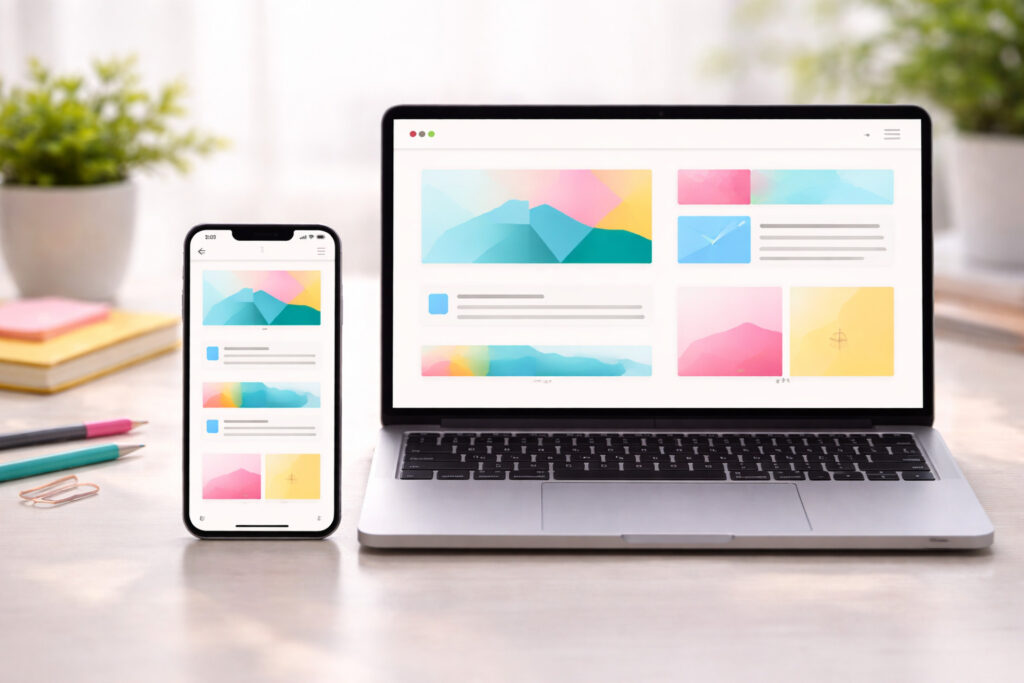
Over half of web traffic comes from phones, so if your portfolio looks rubbish on mobile, you've just lost half your audience. Responsive design isn't optional anymore.
Test your site on actual devices, not just those preview tools. Borrow friends' phones if you need to. Tap every button, zoom in on images, and fill out your contact form. If anything feels clunky, fix it.
Load speed kills portfolios. Compress those high-resolution images before uploading them. A stunning campaign screenshot means nothing if visitors give up waiting for it to load. Aim for pages that load in under three seconds.
Navigation should be obvious. Put your best projects within two clicks of the homepage. If someone has to hunt through nested menus to find your work, they won't bother.
Make your contact details visible on every page. A floating "Hire Me" button or a contact link in your header means people can reach you without scrolling to the footer or digging through an "About" page.
Essential Features Every Portfolio Site Needs
Your portfolio site needs more than pretty pictures. Start with a clear homepage that tells visitors who you are and what you do within three seconds. "Digital Marketer" is vague. "PPC Specialist Who Cuts Client Acquisition Costs" tells them exactly what you bring to the table.
Case study pages should follow a consistent structure. Include the challenge, your strategy, the tools you used, and the results with actual numbers. Slap those metrics in bold so they jump off the page.
An "About" page builds connection. Share your background, your approach to marketing, and maybe a hobby or two so you seem human. Link to your social media accounts if they're professional.
Search engine optimisation helps recruiters find you. Use your job title and location in page titles and descriptions. "Sarah Jones - SEO Specialist London" works better than "Portfolio - Home". Many modern portfolio builders handle basic SEO automatically, but double-check your settings.
Add a blog or resources section if you want bonus points. Writing about marketing trends proves you stay current and gives you more content for search engines to index. Just don't start one unless you'll actually update it. Nothing looks worse than a blog with one post from 2024.
Curating Compelling Content

Quality trumps quantity when selecting portfolio pieces. Focus on work that demonstrates measurable results, strategic thinking, and your ability to solve real business problems through marketing.
Selecting Your Most Impressive Projects
Choose 7-10 pieces that represent your strongest work from the past two years. This isn't a museum of everything you've ever created—it's a highlight reel designed to get you hired.
Pick projects that show measurable outcomes. A social media campaign that increased engagement by 43% beats a pretty graphic that looked nice but did nothing. Portfolios with quantified achievements generate 2.5 times more interview callbacks compared to those listing only responsibilities.
Include variety across different marketing channels. If you're brilliant at email marketing but also dabble in graphic design projects, show both. Potential clients want to see your range without wondering if you're a one-trick pony.
Your portfolio requirements should prioritise recent work. That campaign from 2019 might hold sentimental value, but it's probably not helping you land 2026 projects.
Structuring Case Studies for Impact
Every case study needs five elements: context, problem, solution, implementation, and results. Skip the flowery language and get straight to what matters.
Start with context—who was the client and what were they trying to achieve? Define the problem with actual stakes attached. "Low engagement" is vague. "Instagram engagement dropped 67% after a platform algorithm change, threatening £15,000 in monthly sales" tells a story worth reading.
Explain your strategic approach and why you chose it. Walk through implementation with timelines and your specific contributions. If you worked on a team, be honest about what bits you actually did.
End with results using real numbers. Percentage increases, revenue gains, conversion rate improvements—these metrics prove you can deliver. For mock projects or personal projects without real data, project realistic outcomes based on industry benchmarks whilst clearly labelling them as projections.
Balancing Personal Projects and Freelance Work
You don't need paid clients to build a brilliant portfolio. Personal projects and spec work can demonstrate your capabilities just as effectively when structured properly.
Create mock projects for real brands you admire. Develop a complete campaign including social media content calendars, app UI mock-ups, email sequences, and landing page designs. Document everything as if it were a paying gig.
Pro bono work for local charities or small businesses provides real organisational context and client testimonials. These projects generate actual metrics you can track and improve. Just ensure you're working with organisations that align with your target market.
Your own marketing becomes a live case study. Launch a content series, build your design portfolio site, or start a newsletter. Every follower gained and engagement spike becomes portfolio content that proves you can walk the walk.
Showcasing Visual and Brand Identity Assets
Visual elements need thoughtful presentation. Don't just dump screenshots into a grid and call it done.
For graphic design portfolios, show your process. Include mood boards, initial concepts, and final deliverables. This demonstrates strategic thinking beyond making things look pretty. If you've created brand identity assets or complete brand suites, walk viewers through how each element reinforces the overall visual identity.
Use before-and-after comparisons for redesigns. Screenshot the old website next to your new version. Show the original brand identity alongside your refreshed approach. These visual transformations make your impact immediately obvious.
Motion graphics and interactive elements need special treatment. Embed videos directly or use animated GIFs. Static screenshots of app UI mock-ups don't capture the user experience you've designed.
Create a dedicated section for brand visual identities if that's your speciality. Display logos, colour palettes, typography systems, and application examples together. This shows you understand how identity systems work across touchpoints.
Group similar work strategically. All your design business projects in one area, freelance work in another. This organisation helps visitors quickly find examples relevant to their needs without endless scrolling through unrelated material.
Storytelling and Process: Showing Your Thinking
Your portfolio needs to reveal how you think, not just what you've made. Walking viewers through your creative process, sharing real client feedback, and reflecting on what worked (or didn't) transforms a simple work gallery into proof of your strategic mind.
Crafting Your About Page and Professional Bio
Your About page is where personality meets professionalism. Skip the robotic third-person voice and write like you're chatting with a potential client over coffee.
Explain what drives your marketing work. Maybe you're obsessed with user testing groups or you love turning messy data into clear stories. Share a bit about your background, but keep it relevant to the work you want to do.
Include a professional photo that doesn't look like a hostage situation. Your bio should answer three questions: who you are, what you do brilliantly, and why someone should work with you. Keep it under 150 words if possible.
Add a dash of humour if that's genuinely your style. A personality-free bio makes you forgettable, but forced jokes make you cringey. Find the balance that feels authentically you.
Presenting the Creative and Client Process
Showing your design process matters more than you think. Clients want to see that you don't just pull ideas from thin air whilst panicking at 2 AM.
Document your steps from brief to final deliverable. Include early sketches, wireframes, or mood boards. Show how you mapped the user journey or developed the user interface through iterations.
Explain your client process honestly. Did you run workshops? Conduct user research? Test your portfolio concepts with real people? These details prove you're strategic, not just creative.
Use before-and-after comparisons when possible. "Here's the mess I started with, here's what I built, here's why it works better." This storytelling exercise makes your value crystal clear without you having to brag about it.
Sharing Results: Data, Testimonials, and Wins
Numbers speak louder than adjectives. If your campaign increased conversions by 40%, say so. If your rebrand boosted engagement, share the metrics.
Client testimonials add credibility when they're specific. "Working with Sam was great!" tells nobody anything useful. "Sam's email campaign strategy increased our open rates from 12% to 31% in three months" actually means something.
Display client quotes prominently near relevant projects. A short testimonial underneath a case study reinforces that you delivered real value, not just pretty designs.
Don't have permission to share exact numbers? Use percentages or describe impact qualitatively. "Reduced customer complaint emails" or "shortened checkout process from five steps to three" still demonstrates your development work created measurable improvement.
Reflective and Speculative Work
Include reflection work to show you're self-aware. What did a challenging project teach you? How did user testing change your approach? Honest insights make you memorable.
Add speculative projects if you're light on client work. These are fictional briefs you set yourself to demonstrate skills. Label them clearly as personal projects to avoid looking dishonest.
Personal work reveals what excites you creatively. Maybe you redesigned your local café's branding or created a marketing campaign for a cause you care about. This shows your thinking beyond paid work.
Explain what you'd do differently next time. This vulnerability proves you're not pretending to be perfect—you're actively learning and improving your craft.
Building Your Personal Brand Across Channels
Your personal brand needs to live everywhere your audience hangs out, from LinkedIn to local meetup groups. Consistency across platforms strengthens recognition whilst each channel offers unique ways to showcase your marketing skills.
Integrating Social Media and Online Presence
Your social media accounts should tell the same story but adapt to each platform's quirks. LinkedIn gets your professional wins and thought leadership posts. Instagram and TikTok can show behind-the-scenes content or quick marketing tips that feel less corporate.
Start with a personal website as your home base. This is where your full portfolio lives, complete with case studies and contact details. Think of it as your digital headquarters whilst social platforms are your outposts.
Consistent branding across multiple platforms means using the same profile photo, bio themes, and colour schemes everywhere. Your Twitter banner shouldn't look like it belongs to a completely different person than your LinkedIn profile.
Post regularly but don't spread yourself too thin. Pick two or three platforms where your target clients actually spend time. A brilliant LinkedIn presence beats mediocre accounts on seven different platforms.
Share industry trends and your hot takes on them. Comment on other marketers' posts with genuine insights, not just "Great post!" emoji spam.
Leveraging PR, Google My Business, and More
Google My Business isn't just for shops with physical locations. If you freelance or consult locally, claim your listing. It helps potential clients find you when searching for marketing help in your area.
Public relations doesn't require hiring an agency. Write guest posts for marketing blogs. Pitch yourself as a podcast guest to discuss your speciality. Local newspapers often need expert quotes on digital design trends or social media changes.
Submit your work to marketing awards, even the free ones. "Award-winning marketer" sounds much better than "marketer who hopes they're doing okay." Getting featured in industry publications adds credibility that money can't buy.
Create a simple press kit on your personal website. Include your headshot, bio, past speaking gigs, and media mentions. When opportunities arise, you're ready to go.
Track where your name appears online. Set up Google Alerts for your name to catch mentions you might otherwise miss.
Networking With Communities and Volunteer Opportunities
Facebook groups and Slack communities for marketers are goldmines for building relationships. Answer questions genuinely without constantly plugging your services. People remember helpful experts when they need to hire someone.
Volunteer your marketing skills for charities or community organisations. You'll build real case studies whilst doing good. Nonprofits desperately need help with social media, email campaigns, and fundraising strategy.
Attend marketing networking events both online and in person. Industry conferences, local meetups, and webinars all count. Don't just collect business cards like Pokémon – follow up with actual conversations.
Join professional bodies like the CIM or DMA. Membership adds legitimacy and opens doors to exclusive events and job boards.
Start or moderate your own community around a niche topic. Running a small Discord server for email marketers or a monthly virtual coffee chat establishes you as a connector, not just a participant.
Tailoring for Your Next Move
Your portfolio needs different outfits for different occasions. A freelancer chasing clients needs to show off differently than someone applying for a graphic design degree, and both need updates when AI enters the chat.
Adapting for Job Applications and Admissions
When you're applying for roles or university programmes, your portfolio becomes your most persuasive advocate. Admissions tutors and admission officers at institutions like Open Universities Australia want to see growth and thinking, not just polished final products.
For a Graphic Design BA application, include process work alongside finished pieces. Show sketches, mood boards, and iterations that demonstrate how you think. Your UCAS personal statement might mention specific projects, so make sure those are easy to find in your portfolio.
Application-specific tweaks:
- Lead with work that matches what they're looking for
- Add a tailored intro paragraph explaining why you're interested in their specific programme or company
- Include a well-designed CV or link to download one
- Remove projects that don't support your application
If you're applying for corporate roles versus creative agencies, adjust your tone. A bank wants clean professionalism whilst a startup might appreciate personality. Don't send the same portfolio to wildly different audiences and expect the same results.
Portfolio Tips for Freelancers and Small Businesses
Freelancing and running a small business means your portfolio is also your shopfront. You're not just proving you can do the work—you're convincing strangers to trust you with their money.
Make your portfolio website scannable in under 30 seconds. Potential clients won't read your life story. They want to know: Can you solve my problem? How much will it cost? How do I contact you?
Freelance portfolio essentials:
- Clear pricing or package options (even if it's "starting from")
- Client testimonials prominently displayed
- Specific outcomes like "increased email open rates by 43%"
- Contact forms that actually work
Consider using a portfolio builder if coding isn't your strength. Platforms like Wix, Squarespace, or WordPress let you look professional without development work eating your billable hours. Update your portfolio every few months with fresh projects so it doesn't look abandoned.
Staying Relevant With AI Tools and Modern Trends
AI tools are reshaping what "doing marketing" even means. If your portfolio doesn't acknowledge this shift, you risk looking outdated before your next interview.
Show how you've used AI tools like ChatGPT for copywriting, Midjourney for concepts, or analytics platforms that use machine learning. The trick is demonstrating you're driving the AI, not just pressing buttons. Explain what prompts you used, how you refined outputs, and what human judgement you applied.
Modern portfolio additions:
- Case studies mentioning specific AI tools you've mastered
- Examples of AI-assisted work alongside your creative direction
- Screenshots showing your process, not just results
- Links to interactive content or dashboards
Don't pretend AI doesn't exist or that everything is 100% hand-crafted. Employers know that's nonsense. They want to see you're keeping up with tools that make work faster and smarter. Just make sure you're adding value beyond what the AI spits out.
Latest resources

6th May 2026
How to Ask for — and Get — a Pay Rise
Your complete, step-by-step guide to negotiating a salary increase in the UK Asking for a pay rise can feel uncomfortable, but with the right preparation,...
Read
16th April 2026
Create SEO & GEO Optimised Content
The rules of online visibility have changed, and pretending otherwise is like showing up to a rocket launch with a horse and cart. For the...
Read

16th April 2026
SEO vs PPC: Which delivers Better Results?
Digital marketing can be an absolute minefield (as we all know!), but for consistent results, you can't go far wrong (if you do it right!)...
Read